Traveling with a Baby in 2026: The Technical Guide to Feeding, Luggage, and European Law
In short:
Traveling with an infant requires meticulous planning that goes far beyond simply choosing a tourist destination. It is essential to anticipate the thermal management of food in vehicles, understand the physiological mechanisms related to cabin pressure on commercial flights, and navigate European regulations regarding cross-border parental authority. Careful logistical preparation—incorporating a tailored first-aid kit and hygienic containers—ensures the child's health and safety, as well as peace of mind for the whole family. Furthermore, any medical or nutritional decisions must be validated by the appropriate professionals.
Table of Contents:
Key Takeaways
Car travel with an infant: How to manage temperature inside the vehicle?
Commercial flights and babies: How to manage cabin pressure and airport security?
Carry-on strategy: Which containers to prioritize to minimize surprises?
European borders: What does the law say about parental responsibility while traveling?
On-site organization: Why you need to adjust your family vacation schedule
Frequently asked questions about traveling with an infant
From a simple trip to a structured journey: Which approach should you take?
Key Takeaways
The essentials of travel organization
Organizing a family trip relies on several fundamental pillars that should be anticipated before departure.
Food distribution based on heat: It is best to separate meals between the air-conditioned cabin and the trunk, which is exposed to high temperatures.
Barometric prevention: Encouraging the swallowing reflex helps the child balance ear pressure during altitude changes in the cabin.
Legal documentation: Understanding parental responsibility rights within the European Union simplifies border crossings. Note that these European rules do not apply to Denmark, nor to the United Kingdom since Brexit.
Car travel with an infant: How to manage temperature inside the vehicle?
Temperature management inside a car directly dictates what type of food can be stored in each area of the vehicle.
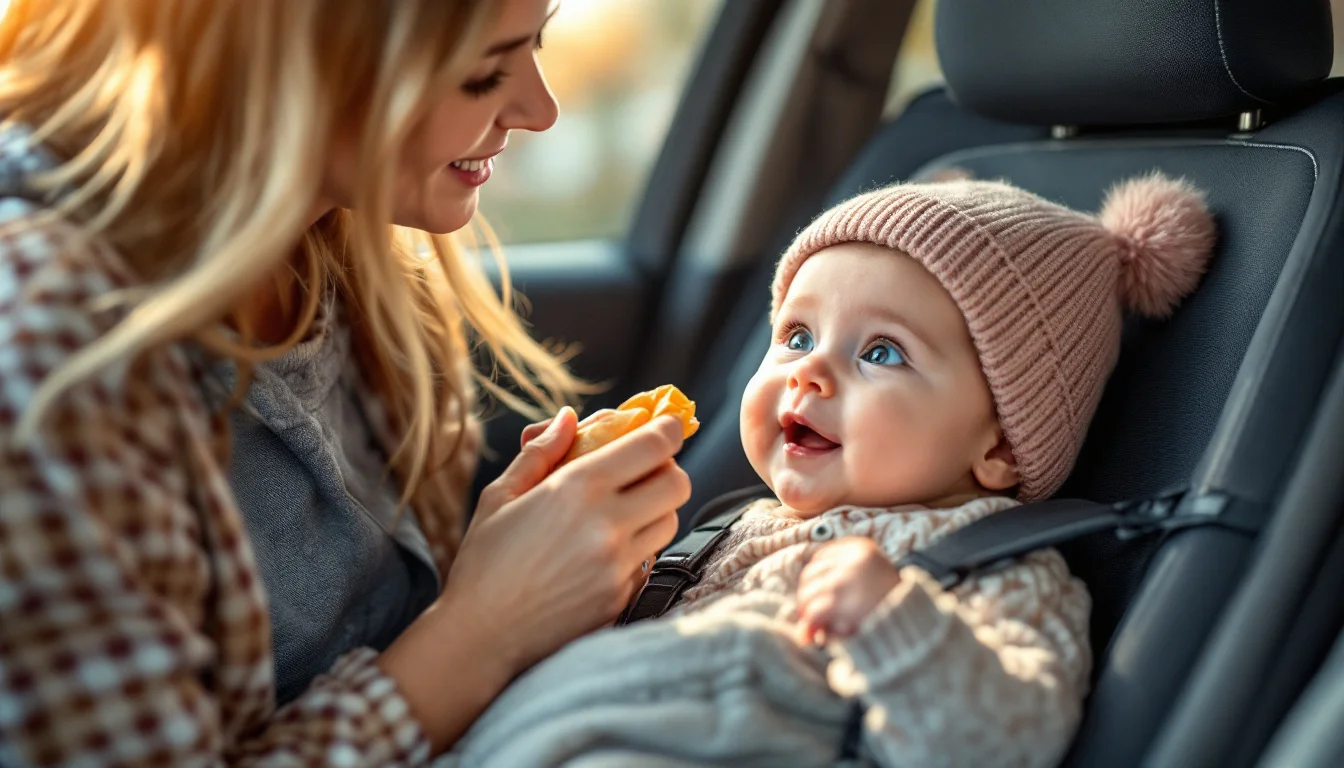
A personal vehicle is often seen as offering total organizational freedom when heading off on vacation. However, the interior space is divided into several distinct climate zones, requiring special attention to the baby food stored there. The temperature in a car's trunk is generally higher than in the passenger cabin. This thermal difference is due to a lack of direct ventilation and the greenhouse effect generated by the rear window, turning this storage space into a potentially hostile environment for perishable food.
Meat and vegetables are particularly sensitive to temperature spikes, especially those exceeding 40°C (104°F). During the intense heat of summer, it is better to keep these baby food jars in the passenger cabin, which stays cooler thanks to air conditioning and constant ventilation. It is also recommended to chill these containers in the refrigerator before departure if they absolutely must pass through a less regulated zone of the vehicle.
Thermal distribution matrix for baby food
To optimize storage during a long road trip, provisions should be classified according to their heat tolerance.
Vehicle area | Thermal conditions | Suitable product types | Logistical recommendations |
Air-conditioned cabin | Regulated temperature and air circulation | Meat-based baby food jars, fresh vegetables, reconstituted milk (to be consumed quickly) | Store in a soft cooler accessible to passengers |
Trunk | Stagnant heat, indirect sun exposure | Powdered milk in sealed packaging, unopened cereal porridge, sealed fruit-based jars, unopened water bottles | Keep away from the car's metal body panels; keep packaging sealed and out of direct sunlight |
Unopened instant cereal porridge and milk powders can tolerate the trunk's environment as long as the packaging remains sealed and shielded from direct sunlight. Conversely, reconstituted milk, open products, and meat or vegetable baby jars must be kept cool in the cabin. When driving, scheduling regular breaks is a common-sense tip for the comfort of both the child and the driver. These frequent stops break the monotony of the journey, air out the cabin, and allow you to check on sensitive provisions.
Commercial flights and babies: How to manage cabin pressure and airport security?
Navigating security checkpoints and handling pressure variations in-flight demand specific material and physiological preparation.
Flying saves precious time over long distances but requires specific preparation for the critical phases of takeoff and landing. A young child's auditory system often struggles to naturally compensate for rapid changes in atmospheric pressure. To facilitate this barometric equalization, stimulating the swallowing reflex proves highly effective. Offering a pacifier, a meal, or a drink during these transitional phases activates the jaw muscles, which helps open the Eustachian tube and relieve ear pressure.
Regarding security regulations, many parents fear having their baby food confiscated. However, bringing food and water for a baby in a carry-on bag is generally permitted on flights, as these items benefit from special exemptions at most European airports. Since specific rules vary by airport and airline, it is advisable to check the conditions with your carrier prior to departure. It is highly recommended to pack a tin of infant formula, a spill-proof sippy cup, biscuits or snacks, and a plastic bag for properly managing waste during the flight.
The unpredictability of air travel, such as missed connections or extended waits on the tarmac, requires generous over-preparation of rations. Whether your child consumes standard formula or toddler milk, you should pack significantly more powder than initially planned to ensure you can continue feeding them properly in the event of a flight delay.
Multipharma summarizes its positioning as follows:
"Multipharma brings together 320 pharmacies in Belgium and offers a wide range of health, care, and wellness products. Through the website or app, you can reserve all your medications for free, even with a prescription, at the pharmacy of your choice. Online orders are delivered for free to a pharmacy or to your home for purchases over €55, with up to 50% off your favorite products. Multipharma also offers in-pharmacy vaccinations, the Bambino program for new parents, and the Multico loyalty program. These services embody the Multipharma philosophy: proximity, expert advice, and care."
Carry-on strategy: Which containers to prioritize to minimize surprises?
The emergency bag kept within reach should consolidate the equipment needed to handle unforeseen delays and local health standards.
The art of packing the child's bag lies in maximizing the utility of each item while minimizing bulk. This bag shouldn't just meet the immediate needs of transit, but should gather the essentials to counter any unexpected events. A young child's carry-on bag should contain diapers, wipes, a change of clothes, a favorite soft toy, a first-aid kit, a bottle, or snacks, with enough supplies to last a significant amount of time in case of a major unforeseen delay.
Securing a hygienic environment on the go
Water quality varies considerably across different regions of the world. Depending on your destination, bringing sterilizing tablets is advised, as you cannot always be certain that tap water in the visited country is potable. These compact devices allow you to sanitize pacifiers and containers without the need for bulky electrical equipment. It is wise to discuss these hygiene options with a healthcare professional or pharmacist before leaving Belgium.
Regarding mealtime equipment, the goal is to minimize mess during nomadic stops. A silicone bib with a deep pocket catches food that drops, limiting the spread of crumbs in a restaurant, on a plane, in a car seat, or in a stroller. A simple wipe with a sponge is enough to clean it, preventing the need to store soiled laundry in the confined space of a travel cabin.
European borders: What does the law say about parental responsibility while traveling?
The European Union's legal framework harmonizes the recognition of parental authority while mandating official documents to clear customs.
Crossing borders with a child raises important legal questions, particularly when the family structure involves unmarried or separated parents. EU law aims to facilitate free movement while protecting minors. In all European Union countries, a mother automatically has parental responsibility for her child, as does a married father; in most cases, parents exercise this jointly. The rights and duties of an unmarried father vary by country. These rules apply to all Member States with the exception of Denmark, which is not bound by European legislation on parental responsibility (under Regulation (EC) No 2201/2003, recast 2019/1111), as well as the United Kingdom since Brexit.
The smooth handling of transnational judicial decisions
When specific measures have been issued by the courts of a Member State, cross-border bureaucracy is greatly alleviated. Decisions on parental responsibility rendered by a court in one EU country are generally recognized in other EU countries (as specified on the European e-Justice portal), although certain specific measures may still require an enforcement procedure or prior certification. This mutual recognition provides security for the travel of single-parent or blended families.
All European Union countries recognize that a child has the right to maintain a personal relationship and direct contact with both parents, even if they live in different countries. By keeping a digital version of the child's health record alongside copies of the family record book (livret de famille) and any relevant court decisions, parents can safeguard themselves against the vast majority of administrative hurdles during random checks.
On-site organization: Why you need to adjust your family vacation schedule
The success of a trip depends on the adults' ability to align their sightseeing ambitions with the biological and cognitive rhythms of the very young child.
Arriving at a destination often marks the beginning of a mismatch between the adults' tourist expectations and the baby's capacity to process it all. Hyperactivity, driven by a multiplication of excursions, generally leads to sensory overload for the young traveler. Activities with a toddler are best kept to short periods, such as a brief walk or a quick visit, followed by generous blocks of rest and naps tailored to their own rhythm.
Breaking days down into small periods of wakefulness prevents nervous exhaustion for the whole family. This deliberate slowing down involves designing the trip around calm anchor points. Meals, sleep phases, and free play times should remain the true milestones of the schedule, pushing tourist visits to the background.
Frequently asked questions about traveling with an infant
Is the water provided on commercial flights suitable for preparing baby food?
Although regulated, the microbiological quality of the water from the aircraft's tanks can vary depending on the stopovers; as a precaution, it is often advised against using it for direct infant consumption. It is best to use sealed bottles of mineral water, either purchased after passing through security checkpoints or requested specifically from the cabin crew.
Should you bring all your baby care products from Belgium?
No, the majority of European destinations have pharmacies and supermarkets offering standard baby care items. However, an emergency supply for the first few days and any specialized equipment tailored to the child's sensitivities should be included in your initial luggage. It is also advisable to check with your pharmacy to see if the infant formula you use is distributed in your destination country to avoid any unpleasant surprises.
Is there a risk of glass baby food jars exploding in the airplane cargo hold?
No, the cargo holds of modern commercial airliners are pressurized and temperature-controlled. Barometric variations stay within norms that do not compromise the integrity of industrial airtight packaging, though careful packing to absorb mechanical shocks is still required.
Is it necessary to consult a family doctor before a cross-border trip?
Yes, a preventive consultation allows you to check that vaccination records are up to date, validate the contents of your first-aid kit, and learn about any specific health guidelines for the region you are visiting.
From a simple trip to a structured journey: Which approach should you take?
Integrating pediatric constraints transforms the trip into an opportunity to strengthen family organization.
Managing the car's temperature, anticipating airspace regulations, and securing an emergency bag all stem from methodical preparation. Such an approach helps safeguard the child's natural rhythm. This preparatory rigor ultimately fades into the background once you arrive, giving way to much greater peace of mind to support the infant in their first sensory discoveries away from home.